There was a time when communities were defined by physical presence. You knew the people who lived near you, worked with you, or studied alongside you. Friendships grew from shared spaces classrooms, offices, neighborhoods. But as the world continues to evolve, so does the way we connect. Today, communities are no longer limited by geography. In fact, some of the most meaningful connections now begin in places you cannot physically see online gaming communities.
At first glance, these communities may seem simple. Groups of players gathering to enjoy a game, compete, or pass the time. But beneath that surface lies something far more powerful. Online gaming slot gacor 777 communities have quietly become spaces where strangers meet, interact, and gradually turn into friends.
From a modern perspective, this shift feels almost inevitable. Life has become faster, busier, and more complex. People often struggle to find time to build new relationships in traditional ways. Online gaming offers an alternative that fits naturally into everyday life. It doesn’t require a special occasion or a planned meeting. It simply requires presence logging in and being part of a shared experience.
What makes these communities unique is how they form. Unlike traditional social settings, where introductions can feel formal or forced, online gaming communities grow organically. You join a game, interact with others, and slowly begin to recognize familiar names. Conversations start small quick messages, simple strategies but over time, they expand. Before you realize it, you’re no longer playing with strangers. You’re playing with people you know.
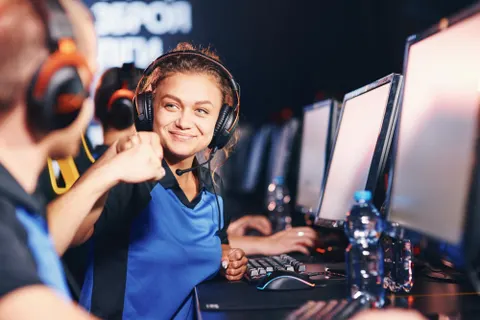
From a storyteller’s point of view, these communities are built on moments. Not grand, life-changing events, but small, meaningful interactions. A shared laugh after a mistake. A collective celebration after a hard-earned victory. Even moments of failure, where everyone tries again together. These experiences create a sense of connection that feels real, even if it exists in a virtual space.
You may not remember every game you played, but you remember who you played with.
From a psychological angle, this makes perfect sense. Human connection is often built through shared experiences, and online games are designed to create those experiences continuously. Whether it’s teamwork, competition, or exploration, players are constantly engaging with one another. This repeated interaction builds familiarity, and familiarity lays the foundation for friendship.
Another important aspect is the environment itself. Online gaming communities tend to reduce many of the social pressures found in real-life interactions. There is less emphasis on appearance, status, or background. Instead, people are judged by how they communicate, how they collaborate, and how they treat others. This creates a more open and inclusive space where individuals feel comfortable being themselves.
From a global perspective, these communities are incredibly diverse. Players from different countries, cultures, and lifestyles come together in a single virtual environment. This diversity adds depth to every interaction. You’re not just meeting new people you’re learning about different perspectives, traditions, and ways of thinking. In many ways, online gaming communities become small reflections of the world itself.
Communication plays a key role in strengthening these connections. Through voice chat, messaging systems, and group discussions, players mahjong slot interact in real time. Conversations often move beyond the game, touching on daily life, personal interests, and shared experiences. Over time, these interactions create a sense of trust and familiarity that transforms casual acquaintances into genuine friends.
From a community perspective, structure also matters. Many online games encourage the formation of teams, guilds, or groups. These smaller communities create a sense of belonging. Members interact regularly, develop routines, and build their own culture complete with inside jokes, traditions, and shared goals. It’s within these smaller circles that friendships often grow the strongest.
There is also a sense of continuity in these communities. Unlike one-time interactions, online gaming allows people to reconnect regularly. You log in, and your community is there. Familiar names, familiar voices. This consistency helps strengthen bonds over time, turning casual connections into lasting relationships.
From a personal growth perspective, being part of an online gaming community can be incredibly valuable. It encourages communication, teamwork, and empathy. You learn how to collaborate with different types of people, how to handle challenges together, and how to maintain relationships over time. These are skills that extend far beyond gaming.
Of course, like any social environment, online gaming communities are not without challenges. Miscommunication can happen, and not every interaction will be positive. But these moments also provide opportunities to learn about patience, understanding, and conflict resolution. In many cases, overcoming these challenges can actually strengthen relationships.
Looking at the bigger picture, online gaming communities represent a shift in how we define connection. They show that meaningful relationships are not limited by physical presence. What matters is shared time, shared experiences, and genuine interaction. These elements can exist anywhere even in a digital world.
In the end, online gaming communities are more than just groups of players. They are spaces where people come together, not just to play, but to connect. They turn strangers into teammates, teammates into friends, and friends into something that feels lasting and real.
Because behind every avatar, every username, and every voice is a person looking for the same thing we all are a sense of connection.