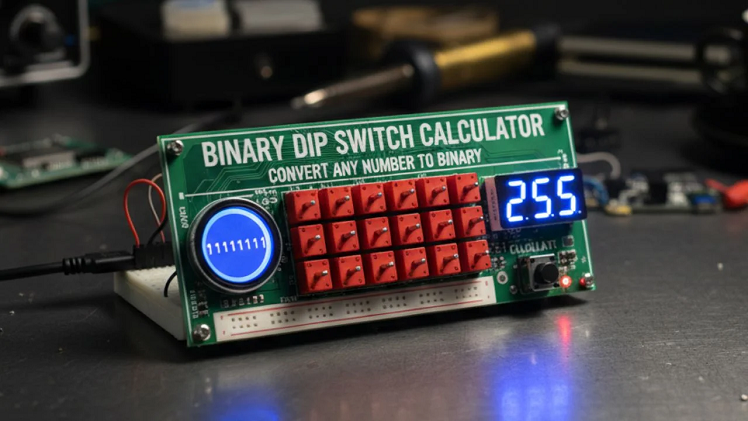
Introduction to Binary Calculations in Modern Computing
Binary numbers form the backbone of all digital systems. Every computer, smartphone, and digital device relies on binary code—sequences of 0s and 1s—to process information. While humans naturally work with decimal numbers (base 10), machines operate in binary (base 2). This difference creates a need for tools that can quickly convert and calculate between binary and decimal systems. A fast binary calculator combined with a binary-to-decimal converter and unit conversion functionality makes working with digital data easier, faster, and more accurate.
What is a Binary Calculator?
A binary calculator is a digital tool designed to perform arithmetic operations using binary numbers. Instead of working with digits from 0 to 9, it only uses 0 and 1. These calculators can handle operations such as addition, subtraction, multiplication, and division directly in binary form.
For example:
- Binary addition: 1011 + 1101 = 11000
- Binary subtraction: 10010 – 101 = 11101
A fast binary calculator automates these operations, eliminating the risk of manual conversion errors and saving time for students, engineers, and programmers.
Understanding Binary to Decimal Conversion
One of the most important features of any binary tool is binary to decimal value conversion. Decimal numbers are what humans use daily, so converting binary output into decimal form helps in better understanding results.
The conversion process is based on powers of 2. Each binary digit represents a power of 2 depending on its position.
For example:
Binary number: 1011
Step-by-step conversion:
- (1 × 2³) = 8
- (0 × 2²) = 0
- (1 × 2¹) = 2
- (1 × 2⁰) = 1
Final result: 8 + 0 + 2 + 1 = 11 (decimal)
A fast converter performs this instantly, which is especially useful in programming, networking, and electronics where binary values are frequently used.
Importance of Speed in Binary Calculations
In modern computing environments, speed is essential. Whether debugging code, analyzing data packets, or working on embedded systems, delays in calculations can reduce productivity. A fast binary calculator ensures real-time results, allowing users to focus on problem-solving rather than manual computation.
High-speed tools also reduce cognitive load. Instead of mentally converting or checking calculations, users can rely on accurate automated outputs.
Unit Converter Integration for Practical Use
A powerful feature of modern binary tools is the integration of a unit converter. This allows users to switch between different measurement systems along with binary calculations. For example, data units such as bits, bytes, kilobytes, and megabytes can be easily converted alongside binary values.
Common conversions include:
- 1 byte = 8 bits
- 1 KB = 1024 bytes
- 1 MB = 1024 KB
This integration is especially useful in fields like computer science, data analysis, and networking where both numerical and data size conversions are required.
Applications in Real Life
A fast binary calculator with conversion features is widely used in several domains:
- Computer Programming
Developers use binary calculations for memory addressing, bitwise operations, and low-level coding. - Networking
IP addressing and subnet masking involve binary arithmetic and conversions. - Digital Electronics
Engineers design circuits using binary logic gates and require quick calculations. - Education
Students learning computer science benefit from instant conversion tools for practice and understanding.
Advantages of Using an Integrated Tool
An all-in-one binary calculator and unit converter offers multiple advantages:
- Reduces manual calculation errors
- Saves time during complex computations
- Enhances learning and understanding
- Supports multiple conversions in one place
- Improves productivity for technical professionals
Such tools are often available online or as mobile applications, making them accessible anywhere.
Conclusion
The combination of a fast binary calculator, binary-to-decimal converter, and unit converter provides a powerful solution for anyone working with digital systems. From students to engineers, these tools simplify complex processes and improve efficiency. As technology continues to evolve, the importance of quick and accurate binary computation will only grow, making such integrated tools essential in both academic and professional environments.